家电论坛

广告合作
 注册  找回密码

QQ登录

只需一步,快速开始

手机号码,快捷登录

手机号码,快捷登录

楼主: 雨轩

松下2010年最新款50寸1024x768分辨率神鸡隆重上架!852x768成为高清国际标准!

[复制链接]

13

主题

4712

帖子

53

威望

特级会员

Rank: 5Rank: 5Rank: 5Rank: 5Rank: 5

交易诚信度
0
注册时间
2006-7-21
发表于 2010-7-26 02:42 | 显示全部楼层
关于1024*768是否属于欧美高清的问题上。SV的解释也只是高喊“不是高清,厂家是骗子”这种很有说服力的论证方法。

而且,他还善于高举道德大棒,把不同意见者批判为“为虎作伥的骗子”。好像这个问题不是标准之争,而是道德审判。家电论坛不是来讨论家电信息的,是来鉴别好人坏人的。
回复 支持 反对

使用道具 举报

187

主题

8599

帖子

184

威望

荣誉会员

Rank: 8Rank: 8Rank: 8Rank: 8Rank: 8Rank: 8Rank: 8Rank: 8

积极参与奖最佳写手奖

交易诚信度
0
注册时间
2001-11-21
QQ
发表于 2010-7-26 02:51 | 显示全部楼层
原帖由 ddhehui 于 2010-7-26 02:17 发表


是不是高清我说了不算,你说了也不算。CEA说它是高清就是高清。

呵呵,CEA说了算?
美国消费电子协会(CEA)是一家卓越的行业协会,通过制定科技政策、组织大型展会、进行市场调研和建立行业战略关系来促进消费电子行业的发展。协会由2000多家会员企业组成,各会员企业的经营涉及音频、视频、移动电子、通信、信息技术、多媒体产品及各种零部件的设计、开发、生产和销售,以及通过消费渠道销售的相关服务。CEA全体会员企业的年营业额总和超过1200亿美元。
  CEA会员服务
  • 消费者与市场研究
  CEA 市场研究为会员企业提供深层次的消费者市场调查数据、趋势、预测、警告以及其他市场数据。
  • 公共政策
  CEA是消费电子行业在美国国会和州议会中的代表。CEA中的政府与法律事务部门时刻关注者美国政府与联邦立法和联邦法令,并评估它们对消费电子行业的潜在影响。
  • 技术标准
  通过将消费电子技术行业工程师联合在一起,CEA 能够推进行业标准的制订,指导企业进行产品的开发、制造和产品间的互联。
  • 教育与发展
  CEA致力于确保技术人员掌握产品维护技术。通过移动电子产品等级认证(MECP)等培训项目,技术人员可以获得技术等级认证,或者增加自己在这一领域方面的知识。
  • 交流推广机遇
  CEA致力于与会员企业合作,共同促进数码电视、无线互联网、新一代音频存储媒体DVD-Audio、车载PC、家庭网络和其他消费电子产品等新技术的推广和应用。
回复 支持 反对

使用道具 举报

13

主题

4712

帖子

53

威望

特级会员

Rank: 5Rank: 5Rank: 5Rank: 5Rank: 5

交易诚信度
0
注册时间
2006-7-21
发表于 2010-7-26 02:53 | 显示全部楼层
原帖由 svideo 于 2010-7-26 02:51 发表

呵呵,CEA说了算?
美国消费电子协会(CEA)是一家卓越的行业协会,通过制定科技政策、组织大型展会、进行市场调研和建立行业战略关系来促进消费电子行业的发展。协会由2000多家会员企业组成,各会员企业的经营涉 ...


你的意思是CEA说了不算,你说了算?你说的英语美国人能听懂吗?
回复 支持 反对

使用道具 举报

13

主题

4712

帖子

53

威望

特级会员

Rank: 5Rank: 5Rank: 5Rank: 5Rank: 5

交易诚信度
0
注册时间
2006-7-21
发表于 2010-7-26 02:54 | 显示全部楼层
这是一场PK。一个自诩为平板电视专家的荣誉会员,加上一个曾经是版主的超级会员。为了一个最基本的高清电视机制造标准和一个从事土木工程行业的家电爱好者进行的PK。
回复 支持 反对

使用道具 举报

187

主题

8599

帖子

184

威望

荣誉会员

Rank: 8Rank: 8Rank: 8Rank: 8Rank: 8Rank: 8Rank: 8Rank: 8

积极参与奖最佳写手奖

交易诚信度
0
注册时间
2001-11-21
QQ
发表于 2010-7-26 02:55 | 显示全部楼层
原帖由 ddhehui 于 2010-7-26 02:19 发表


这种解答属于什么范畴?关于这个问题,你没有一次正经的回应。是不敢,还是不懂。

自己愿意做傻子,不能当别人是傻子。
松下推出1024等离子,还自称是高清,你偏说在欧美是高清。拿大家都当傻子呢?
高清电视节目,分辨率最低是1280*720,你用1024*768的电视看,不管是在欧洲在美国,都看不出高清效果,低于1280*720,是哪门子的高清?东拉西扯,就为了误导网友?
回复 支持 反对

使用道具 举报

187

主题

8599

帖子

184

威望

荣誉会员

Rank: 8Rank: 8Rank: 8Rank: 8Rank: 8Rank: 8Rank: 8Rank: 8

积极参与奖最佳写手奖

交易诚信度
0
注册时间
2001-11-21
QQ
发表于 2010-7-26 02:57 | 显示全部楼层
原帖由 ddhehui 于 2010-7-26 02:54 发表
这是一场PK。一个自诩为平板电视专家的荣誉会员,加上一个曾经是版主的超级会员。为了一个最基本的高清电视机制造标准和一个从事土木工程行业的家电爱好者进行的PK。

别给自己戴高帽子,谁和你PK,这是提醒大家不要上当。松下推出1024的等离子,自称高清,这是不符合中国标准的,你偏说符合欧美标准。[s:98]
回复 支持 反对

使用道具 举报

175

主题

6877

帖子

91

威望

超级会员

Rank: 6Rank: 6Rank: 6Rank: 6Rank: 6Rank: 6

交易诚信度
0
注册时间
2009-4-17
发表于 2010-7-26 02:59 | 显示全部楼层
原帖由 ddhehui 于 2010-7-26 02:36 发表


在这个问题上,他一直在用“脑子进水了,再好好想想”这类具有很高技术含量的描述来进行反驳。


论坛上有几个类似的,只要理屈词穷没啥说了,就会搪塞一句:
"以你的智商………”,
"你想想……"、
"你懂的……"
“你要是再不明白就……”
之类的话,来掩饰自己心虚。
更恶劣的就是赤裸裸人身攻击。

其实观点对错没什么了不起,谁也不是万能神仙无所不知 ,
但动不动把自己架到“一贯英明、永远正确”的人民“公主”神坛上,摆出一付居高临下训斥臭嘴脸,实在让人倒回胃口。
需知网友到论坛是寻开心的,不是找不痛快的,当真以为就你会骂人么,就你能给别人造成不痛快么?
回复 支持 反对

使用道具 举报

13

主题

4712

帖子

53

威望

特级会员

Rank: 5Rank: 5Rank: 5Rank: 5Rank: 5

交易诚信度
0
注册时间
2006-7-21
发表于 2010-7-26 03:03 | 显示全部楼层

回复 865# svideo 的帖子

请对1440*1080规格的16:9画面高清摄像机的设计原理做一次有点技术含量的解释。不要再逃避。
回复 支持 反对

使用道具 举报

13

主题

4712

帖子

53

威望

特级会员

Rank: 5Rank: 5Rank: 5Rank: 5Rank: 5

交易诚信度
0
注册时间
2006-7-21
发表于 2010-7-26 03:05 | 显示全部楼层
原帖由 svideo 于 2010-7-26 02:57 发表

别给自己戴高帽子,谁和你PK,这是提醒大家不要上当。松下推出1024的等离子,自称高清,这是不符合中国标准的,你偏说符合欧美标准。[s:98]


不符合中国高清我从来没有否认过,而且一开始就说明了。

符合欧美高清吗?请回答。
回复 支持 反对

使用道具 举报

13

主题

4712

帖子

53

威望

特级会员

Rank: 5Rank: 5Rank: 5Rank: 5Rank: 5

交易诚信度
0
注册时间
2006-7-21
发表于 2010-7-26 03:17 | 显示全部楼层
制定标准不是拍脑门。虽然不能说中国的技术比外国差,但发达国家的产品质量标准至少不比中国差。尤其是高新技术方面,中国的产品标准基本上是在追着人家的屁股跑。

标准制定的目的主要有两个:一、规范生产制造的工艺,规格、参数。二、通过规定性能指标限值,确保合格产品的性能达到应有的水平。

符合欧美HDTV产品制造标准的产品,至少在清晰度这个指标上是能够称作“高”的。标准中也介绍了,这个指标是靠肉眼来检测的,不是靠数点数来决定的。

所以,既然1024*768的产品符合欧美高清标准,就意味着,编制欧美产品标准的专家们,认为这个产品的清晰度是高的。
回复 支持 反对

使用道具 举报

187

主题

8599

帖子

184

威望

荣誉会员

Rank: 8Rank: 8Rank: 8Rank: 8Rank: 8Rank: 8Rank: 8Rank: 8

积极参与奖最佳写手奖

交易诚信度
0
注册时间
2001-11-21
QQ
发表于 2010-7-26 06:05 | 显示全部楼层
horizontal-resolution.gif
回复 支持 反对

使用道具 举报

187

主题

8599

帖子

184

威望

荣誉会员

Rank: 8Rank: 8Rank: 8Rank: 8Rank: 8Rank: 8Rank: 8Rank: 8

积极参与奖最佳写手奖

交易诚信度
0
注册时间
2001-11-21
QQ
发表于 2010-7-26 06:07 | 显示全部楼层

Horizontal Resolution (NTSC video)

A PC screen may have a resolution of 800 x 600 which means 800 pixels (dots) going across horizontally (width) and 600 pixels going down vertically (height)*.
TV's engineers, however, only speak about TV resolutions in terms of the number of lines going across (resolution width) not down vertically (resolution height)! Why? Because all TV's have exactly the same amount of lines going down (resolution height), but not all TV's have the same amount of discernable dots going across. For example, an American TV picture will always scan (project) 480 lines horizontally (resolution height), but the number of lines going across (resolution width) will always depend on the quality of the TV and the signal broadcast to it.
A VHS video will only offer about 210 dots across while a TV station may offer about 330 dots across!

TV engineers use a test pattern to determine a TV's resolution. This test pattern has lots of vertical lines like this:
The engineer increases the lines until it is impossible to see any lines because they have all blurred into each other. When the lines cannot be seen any more the maximum resolution of the TV has been reached. These test lines are stacked from left to right as seen in the picture above. Because the lines are stacked from left to right, the number of discernable lines across on the TV screen is called the horizontal resolution!
So when we say a TV has 485 lines we mean it has a maximum resolution of 487 dots across. But to say a TV has 487 dots across is never correct since it will always be less unless the signal quality is perfect . . . If we take into account signal loss and low broadcast quality we are looking at something like 330 lines.
            
TV screens have an aspect ratio of 1.33:1 and are slightly oblong.
Video Format.............................. Horizontal Resolution (resolution width)
Standard VHS............................. 210 Vertical "Lines"
Hi8...............................................400 Lines
Laserdisc......................................425 Lines
DV...............................................500 Lines
DVD............................................540 Lines(?) [some actual DIGITAL sizes: 720(w)x480(h), 704(w)x480 or 352(w)x480 ]
Typically, for actual NTSC signals, 485 lines are used for displaying the picture (because real NTSC signals are interlaced, that equals 242.5 lines for each of the two fields making up the frame).
Note: NTSC has a reported horizontal resolution width of 525 lines; not all of these are _visible_!

"We suggest capturing at a resolution that most closely matches the resolution of the video source.
For video sources from VHS, Hi8, or Laserdisc, SIF resolution of 352x240 will give good results.
For better sources such as a direct broadcast feed, DV, or DVD video, Half D1 resolution of 352x480**is fine."

[size=-1]*Note that PC resolutions are typically expressed in "pixel-width by pixel-height"; sometimes abbreviated as (w) x (h) ...
**352 matches the actual visual resolution width of about 330 for TVs; 480 provides that max theoretical visual resolution height.
回复 支持 反对

使用道具 举报

187

主题

8599

帖子

184

威望

荣誉会员

Rank: 8Rank: 8Rank: 8Rank: 8Rank: 8Rank: 8Rank: 8Rank: 8

积极参与奖最佳写手奖

交易诚信度
0
注册时间
2001-11-21
QQ
发表于 2010-7-26 06:11 | 显示全部楼层
Vertical resolution.
Since vertical resolution is the easiest to understand, that’s where we’ll start.
In simplest terms it is the number of picture elements the image has in a vertical measurement (from top to bottom).
People can easily get confused as the wording “number of horizontal lines” is often used.
Have a look at Figure 2 on the left.
Images in a picture tube are formed by an electron beam lighting up the phosphorus face.
It does so by "drawing" each line, left to right, top to bottom, line by line.
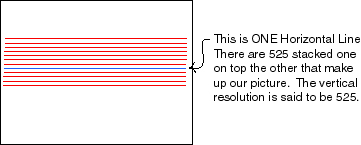
The number of distinct horizontal lines from top to bottom is our vertical resolution.
In our NTSC television system, that number is 525, and it's
525 regardless of the source, such as VHS, laserdisc, DVD, etc. (The number is 625 for the PAL system in Europe.) This is fixed.  We should note that not all of the 525 lines are used to paint the picture that we view.
In actual fact, 43 of those lines get pinched and used to carry other data such as the closed captioning text, and video test/monitoring signals. Also, a few are lost during the time that the electron beam moves from the bottom back to the top to begin scanning another picture. That leaves 482 lines of information that make up the final picture we see, and this number is the limit for vertical resolution in our NTSC system.

Of these 482 lines, only half get painted at a time.
That is because our NTSC system is interlaced.
Every other line (1,3,5, etc.) is painted first in 1/60 of a second, then the remainder of the lines (2,4,6, etc.), one between each of the first set, get painted in the next 1/60 of a second.
So a half-frame of information is delivered every 1/60th of a second.  For more information on interlaced display, check out our article on progressive DVD.
回复 支持 反对

使用道具 举报

187

主题

8599

帖子

184

威望

荣誉会员

Rank: 8Rank: 8Rank: 8Rank: 8Rank: 8Rank: 8Rank: 8Rank: 8

积极参与奖最佳写手奖

交易诚信度
0
注册时间
2001-11-21
QQ
发表于 2010-7-26 06:11 | 显示全部楼层
Horizontal resolution . . . where the confusion begins.
Horizontal resolution should be the number of elements the make up the picture as measured across or horizontally (side to side).
Like its counterpart, the horizontal resolution is sometimes called the “number of vertical lines”.
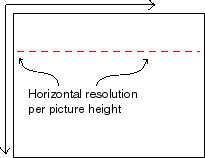
Personally, since we’ve already got horizontal lines stacked one on top the other in our minds, I’d prefer to think of horizontal resolution as the number of unique picture element which each of those horizontal lines contains.
See Figure 3, below, right.
This number, unlike vertical resolution, can vary and does so primarily in terms of the source’s capability.
The problem that I have found is that horizontal resolution can be expressed a couple of different ways.
One method is used in computer circles where it is expressed as the absolute number of elements that make up the picture on your computer monitor from left to right.
This is not how it is traditionally expressed in the video world.
For consumer television we express horizontal resolution as the number of picture elements across per picture height.
If you have a quick look at your TV (or computer monitor), you can see it's not square but rectangular, slightly wider than it is tall.
When talking about horizontal resolution, we want to express it in a way that can relate to the vertical (so we can know if it is more or less sharp in one axis than the other and by how much).
So when you hear that a particular video source has so many lines of horizontal resolution, it is not the total number of picture elements drawn on each line from left to right, but the number drawn within the distance of the height of the picture.
This is where the confusion sets in.
We’ve been told that VHS has 220 lines, broadcast TV has about 330, laserdisc weighs in at 400, and our beloved DVD boast 540.  540?
If that is the best that is available at this moment, then my TV with a horizontal resolution of 600 ought to be plenty.
Unfortunately, not so.
In just about every case, the TV manufacturer is talking about the total number of picture elements its tube can show from left to right, not the “per-picture-height” that all the above figures are expressing.
To put it into perspective, consider the following:
the ratio of our TV’s width to height is fixed at 1.33:1 (that is, the screen is 1.33 times wider than it is tall).  This is called the "aspect ratio". If we want to know what the total number of picture elements in the horizontal comes from say, DVD, we take its per picture height figure (540) and multiply by 1.33 for an answer of 720.

Hummm…..recall for a second what we said the vertical resolution in our system was:
482.
If DVD is delivering 720 elements horizontally, the resulting picture is 720 x 482.
If the total number of picture elements horizontally delivered by DVD is 720 then this so called “high resolution” television of mine with a horizontal resolution of 600 is already incapable of showing all the information that DVD has to offer!

In reality, there are a number of other very technical factors that limit the actual resolution you physically get, but these are beyond the scope of this introductory paper.
There is one I’d like to touch on though:
Overscan.
回复 支持 反对

使用道具 举报

84

主题

7214

帖子

2

威望

中级会员

Rank: 3Rank: 3Rank: 3

交易诚信度
0
注册时间
2010-7-2
发表于 2010-7-26 08:22 | 显示全部楼层
哎 不知道说啥好了

DD 改收手了~~
回复 支持 反对

使用道具 举报

您需要登录后才可以回帖 登录 | 注册

本版积分规则

Archiver|手机版|手机版|客服:010-60152166 邮箱:zx@jd-bbs.com QQ:895456697|广告合作|账号注销|家电联盟网

京公网安备 11010602010207号 ( 京ICP证041102号,京ICP备09075138号-9 )

GMT+8, 2026-4-10 23:14 , Processed in 0.182115 second(s), 25 queries , Gzip On.

快速回复 返回顶部 返回列表