| --- |

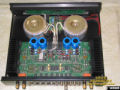
| Kenwood Supreme 1 Stereo Integrated Amplifier - 1967
Trio/Kenwood's cost-no-object late 60's audiophile solid state integrated amp, the "Supreme 1" was one of the most expensive amps ever put into production up to that time. It was an amazing amp with awesome build quality and Kenwood used the cream of its audio design staff to build it. It was also a very expensive product with very limited distribution. It was really too expensive to be viable mass production item, so Kenwood used all the expertise it gained building the Supreme 1 to build it's next range of top line mass market amps which included the (1969) KA-6000 and it's successor the (1971) KA-7002. (...further down this list).
Kenwood followed up the Supreme 1 up with another (..much easier to find secondhand) elite upmarket audiophile product, The Model 600 Integrated Amp, in 1973.
The Supreme 1 is very rare but still turns up very occasionally and fairly cheaply on some of the less frantic web auction sites. |

| Heathkit AR-15 Stereo Receiver - 1968
Great early solid-state product which was considered one of the better sounding receivers in it's day. It was available as a kit or factory built. Some consider this unit better sounding than the excellent Sansui Amps from the mid-70's
Very inexpensive secondhand, but watch out for sloppy kit built examples which may not live up to the hype. |

Sherwood S-7900A | Sherwood S-7900/S8900 - S7900A/S8900A Stereo Receivers - 1968/9 to 1974
Sherwood seems to have a perennially cut price aura about it, but back in the 60's and 70's it was a fairly major, albeit low-key, force in quality hi-fi.
These old Sherwood receivers have a stellar reputation, with excellent amps and tuners, and are as good as many better known name vintage brands from the same era and usually much much cheaper secondhand.
The Flagship (1969) S-8900 and (1972) S-8900A have FM only tuners and put out slightly more power than the AM/FM 7900 & 7900A.
The bigger, more powerful Mid-70's S-9910/8910/7910...etc range of receivers are also pretty decent and worth checking out as well. |

Sherwood S-9900 | Sherwood S-9500 / S-9900 Integrated Amplifiers - 1968
As an alternative to the Sherwood Receivers above, these amp's from the same era are just as good if not better. The sound that these late sixties unit's produce will really surprise you. If you don't need or want a tuner, check these out instead.
These can be much harder to find than Sherwood's receivers...especially the S-9900. |

| Sony STR-6120 / 6200F Stereo Receiver - 1968 / 1970
Sony's top of the line late 60's receiver is a warmly balanced period gem. Fairly hard to find...most common in the US and Europe. FM only tuner. Later model (1970) 6200F adds a extra Aux input and deletes the obsolete "tape head" input.
Also keep a lookout for the 6060FW from slightly earlier which is probably even better sounding than the 6120/6200 but even harder to find. |

| Pioneer SX-1500T Stereo Receiver - 1968
Excellent Top of the Line late sixties early solid state Pioneer which some people actually prefer to their valve equipment from the same era. A lot of this old 60's stuff looks a bit "Granddaddy" but you'll be amazed how good it sounds.
Pioneer SX-1500T Image - http://img3.imagebanana.com/img/3i3w9x56/IM003738.JPG
Not on anyone's radar and can be dirt cheap secondhand... |

| Pioneer SA-900 Integrated Amplifier - 1969
A great amp which has gotten some amazing write-ups. This top of the line late 60's Pioneer includes what appears to be a early moving coil stage for vinyl in addition to the usual moving magnet. Often a bargain secondhand.
This whole range SA-500 / 700 / 900 is great but the bottom of the range SA-500 only puts out 10 watts per channel. Stick with the 700 or 900. |

| Sansui Model 2000A / Model 2000X / Model 4000 Stereo Receivers - 1969/70
Inexpensive amazingly good sounding late 60's tuner/amplifiers...a great warm sold state sound...If your looking at this list and scratching your head, considering getting something, and wondering where to start and if vintage stuff is worth the trouble......check out a Model 4000 (..which can often be had for under $100..) and decide for yourself...
Sansui 4000 - http://www.classicsansui.n.../4000/4000a.jpg |

| Sansui Model 5500 Stereo Receiver - 1969
A top end, very obscure Sansui product from the late sixties (and a funky-er alternative to the Sansui 4000)...with the great warm sound all these early solid state Sansui's seem to share. HEAPS..!! of inputs, (...3 tape loops plus a noise reduction adapter connection (..or 4th tape loop) and a 4 Channel Adapter plus a AUX input as well, if you use the tape loops as line in's only, that gives you 5 AUX inputs in total. In addition, you can connect 4 pairs of speakers to this unit). Very flexible and useful. 45 Watts Per Channel RMS.
Don't confuse this unit with the Sansui QRX-5500 Quadraphonic Receiver which came along a few years later.
The Sansui AU-555 to AU-999 Integrated Amps from this era are also worth investigating as they sound excellent, but usually need a bit of repair work to bring them up to speed. I originally had them listed here, but the 5500 Receiver is a lot more flexible, more attractive and typically very inexpensive. |

| Kenwood KA-7002 Integrated Amplifier - 1971
Hard-Core Kenwood aficionados tend to go for the late 70's stuff and the elite mid-70's Model 600 but the KA-7002 (..which replaced the plainer looking KA-6000) is a really nice early 70's integrated with great solid build quality (...machined steel knobs) and a luxurious expensive feel to the controls and Kenwoods unique early 70's warm smooth sound ....Most people pass these over for some of Kenwoods better known later amps and the 7002 is fairly inexpensive to buy secondhand.
Kenwood KA-7002 Image (..with matching tuner) - http://audioklassiks.de/Bi...kt.7000.06.jpg
The KA-7002 was replaced by the KA-8004 in 1973 and then by the KA-8006 in 1974. |

| Marantz Model 2230 / 2270 Stereo Receivers - 1971
One of the most highly regarded Marantz units is actually at the bottom end of the range (30wpc). A great deal of people have commented on how the simple low end, low power Marantz's seem to sound better than the flashy upmarket models. It has a nicely balanced version of Marantz's warm, full sound.
Marantz 2230 Image - http://www.audiovintage.fr...0/imgp3164.jpg
These seem to have gotten a bit of a reputation and hype (..along with this whole range), and can be a priced a bit more than seems reasonable (..i.e anything over $200)....if your paying over $200 you might be better off with the 2250B or a 2265B listed further down this list which are a bit more powerful, or a try a Marantz 2215 (15wpc) or 2235B (35wpc) from this era which are also excellent but not hyped and often cheap. Or alternately even a Sansui 4000 which is just as good as the 2230 and regularly under $100.
The top of this early 70's range (...apart from the very top end models 18 & 19 with oscilloscopes, which were introduced in the late 60's), was the 2270. A legendary excellent sounding, 70 Watt per Channel RMS receiver with a few well documented issues, which can actually sell for less than the overhyped less flexible lower powered 2230 and is probably much better value.
Note: Give the Marantz stuff a miss if you intend to use these units anywhere near a computer with a CRT monitor...for some reason it "messes" them up and throws the tuner "off"...some of them are also very sensitive to external RFI (Radio Frequency Interference) as well.
....only seem to happen on these early to mid 1970's Marantz units. |

| Kenwood Model 600 Integrated Amplifier - 1973
After the late 60's "Supreme 1" Kenwood intended to follow up with another audiophile amp project but got into some sort of argument with the designers of the Supreme 1 of how to properly follow it up. It was never resolved completely and the Supreme 1 designers left Kenwood and started a new Audiophile company "Accuphase". Anyway...Kenwood assigned some new people to the project and continued alone to create their own follow up model which became "The Model 600". Released in Japan in late '73, it was eventually followed by a whole range of ultra-audiophile "elite" components which existed separate from Kenwoods regular mainstream range.
The model 600 is the ultimate Kenwood integrated from the 70's next to the 1978 KA-9100. It tends to be expensive S/H but keep a look out for one as occasionally they can be snapped up cheaply at garage sales and flea markets.
It was finally replaced by the almost identical KA-907 in 1979 which had a couple of cosmetic variations during it's short run. These are much much harder to find than the model 600 and have a few issues with rare parts which are now no longer available.. |

| Pioneer SA-9100 Integrated Amplifier - 1973
This might be Pioneer's best sounding 70's integrated and definitely one of the best amps from the early 70's. Once again, with a typical early solid state warm, smooth sound. Just about all of Pioneer's early solid state stuff from 1968 to 1974 is worthwhile.
The later models from 1975 are still very nice, but sound different...less fuller, with a slightly brighter sound.
Pioneer SA-9100 Image (..shown with Pioneer Oscilloscope) - http://audioklassiks.de/Bi...100_9100_01.gif |

| Pioneer SX-1010 Stereo Receiver - 1974
Pioneer's ultimate mid-70's receiver and the pinnacle of their warm "Valve" like sounding solid state range. One of the best receivers made in the 70's...especially of you like that warm smooth sound. Partner this with the Quadraphonic Pioneer QX-8000A listed in the Quad section, and you can set up a vintage driven 5.1 system.
More SX-1010 Info - http://www.hifi-museum.com...eerSX1010.html
The next completely redesigned range sounded more modern with a sharper, brighter sound but lost some warmth. |

| Tandberg TR-2075 MK I & II /TR-2080 Stereo Receivers - 1974 to 1980's
These great looking European units were very expensive new and one of the few European brands successfully exported into overseas markets. They are typically fairly expensive secondhand although occasionally you can pick up a bargain.
They tend to be hard and expensive to repair if they break down as well. Only buy one of these if it's fully functional.
They have a reputation for excellent sound quality with a quality AM/FM tuner included. |

| Marantz 2250B Stereo Receiver - 1973/4
My first choice for a mid-70's Marantz. Not the cheapest in the range, not the most expensive. These early/mid 70 Marantz's all seem to have an identical sound (...i.e warm and full)...Among all those, the 2250B has been singled out as one of the better sounding models in this mid-70's range.
Fairly inexpensive secondhand. |

| Sansui 8 Deluxe Stereo Receiver - 1974
Sansui's top of the line mid-70's stereo receiver. Most people tend to go for it's successor, the classic 9090 & 9090DB models, but some prefer the sound of the 8....maybe a bit less bass heavy than the 9090 and a touch more warmth.
The 8 deluxe is usually very inexpensive secondhand, typically a third of the price of a decent 9090DB. |

Rotel RX-802 | Rotel RX-602 / RX-802 Stereo Receivers - 1974
These are slimmer than typical components for this era that are more common in Europe and the UK. They have a nice expensive feel to the controls and their sound quality is similar-ish to mid-70's Marantz (warm and full) with maybe a bit more spacious soundstage. They were also available in black...most likely in Europe only.
They go particularly well with some UK speakers from the era....like Jim Rogers JR-149's / 150's. |

| Heathkit AR-1515 Stereo Receiver - 1975
The AR-1515 is a funkier/futuristic (..for 1975) update of the companies highly regarded AR-15 from the late 60's (via the previous updated AR-1500 model). The amp circuit is, I believe, virtually identical with a few choice changes. The digital display on the tuner was a unique (..and expensive) feature at this point in the mid-70's and was probably included to take some attention away from the upper end Japanese hi-fi product it was competing with for sales. Many American companies were fighting for survival against the Japanese onslaught and cut costs wherever they could to stay competitive. (..Ironically many were being built from Japanese components and regularly completely assembled in Japan as well...). This unit show's a few signs of that cost cutting in the cheap, simple potentiometers used for the volume/selector/mode controls that cause problems over time and should be replaced in any unit you pick up now.
However, despite the cost cutting issues, this unit is still an excellent sounding (..and unique) product from the era and worth checking out if one turns up. |

Pioneer SX-850 | Pioneer SX-850 / 950 / 1050 / 1250 Stereo Recievers - 1976
The best of the later silver on silver ranges. These succeeded the SX-1010 backlit blue range of receivers and the sound moved away from the valve like warmth of the earlier models. These are also very good sounding and are absolutely massive units which take up a lot of room on your shelf. The SX-850 is mid-range but is still very big. The 1050/1250 tend to get expensive on auction sites (...although they have been trending downward recently) but the lower SX-850 is still an excellent unit.
Pioneer SX-1050 Images - http://vintageelectronics....elsx-1050.html
The next receiver range SX-xx80 is worth checking out as well ...especially the classic mid-range and very inexpensive SX-780 and the top end SX-1280. The massive/powerful top of the line in this range SX-1980 has a reputation for not sounding as good as the models lower down the range. I've noticed many (..not all) that have compared, seem to gravitate back to the older SX-xx50 range. |

| Sansui 9090 / 9090DB Stereo Receiver - 1976
This unit replaced the Model 8 Deluxe and looks great in that 70's retro sort of way. This is flat out a lot of peoples favorite 70's Sansui receiver (..next to the G-9000). There have been a lot of superlatives thrown in this units direction, but the praise is not unanimous as some have commented that some 9090's can be a bit too bass heavy... Nevertheless, this is one of the most popular secondhand vintage hi-fi items from the 1970's.
The DB version adds the now useless Dolby circuit and adds a bit more power as well but loses the tape to tape dubbing facility and the occasionally useful FM high blend switch. The 9090 used to be fairly expensive but the secondhand value for many have recently dropped down to reasonable levels.
I've read of people using the second pre-out to connect to an outboard valve/tube power amp, giving you solid state & valve on the one handy unit....an option to consider..
The 8080 models just below this one sound identical, but lose a bit of power and a few non essential facilities. |

| Onkyo TX-8500 Stereo Receiver - 1976
This was Onkyo's serious mid-70's effort to be a major player in the audiophile receiver stakes. The result is one of the best sounding receivers made in the 70's. Unfortunately this was released just as the "Power Wars" era kicked in, and the 100 Watts RMS this unit produced didn't look too impressive against the 185 Watts RMS of the comparable Pioneer and Marantz models from the same year.
Onkyo addressed that by releasing the restyled and redesigned massive MKII version in 1978 with a early digital flouro display and 165 Watts Per Channel under the hood. However, by then, the other companies had gone nuts and their massive top end receiver models were producing close to 300 Watts RMS, topping out with the Technics SA-1000 at 330 Watts RMS...which is absolutely insane..!
The thing is, the original 1976 TX-8500...sounds better than all of them including the overcomplicated, and often unreliable MK II version.
Original Onkyo TX-8500's are pretty hard to find, but a worthwhile pickup and usually much cheaper, than some comparable quality models from this era.
Excellent Phono stages in these units for Vinyl fans. |

| Kenwood KR-9600 Stereo Receiver - 1976
Kenwood's top of the line mid-70's receiver, and a worthy and attractive competitor to the Pioneer SX-1010. Excellent tuner and amp although some prefer the KR-7600 model just below it. Prices can be fairly low because of some unobtainium parts which, if they fail, turn it into a massive doorstop. Don't buy one of these if the seller says one of the channels is not working..!! |

| Harman Kardon HK-730 Stereo Receiver - 1976
Harman Kardon's second from top of the line mid-70's receiver (..top was the Citation..).. has a lot of fans. Some put this unit in the top ten of the best mid-70's Receivers. Designed for sound quality over power output (40 Watts RMS).
The early 70's model 930 is also highly regarded by many, but I prefer the looks of this one. |

| WEGA 3141 Stereo Receiver - 1977
A ...Wild Card...European unit which might be an interesting pickup. Wega rebadged a few excellent high end Japanese items for the European market in the mid-70's in addition to their own stuff. This one is interesting, as the styling here is VERY similar/identical to "Tandberg" stuff from the 1980's and there may be some connection..?? |

| Marantz 2252B / 2265B / 2285B Receivers - 1977
Late 70's Marantz with still the same warm sound but a little bit thinner and sharper. I do think that that some of the early 70's Marantz models give these a run for their money...and this range can sound very bright with some sources and speakers. The 2285B is considered the best Marantz Receiver from the late 70's along with the original 2330 (..non "B" version) from the previous (1975) range. Both are fairly expensive used so I'd suggest checking out the 2252B and the 2265B instead or the (1974) 2250B.
The 2252B has a slight excess of high frequencies compared to some other models in this range...if that's gonna bug you, pass it by.
Marantz 2265B Image - http://www.siamac.de/aumatt/images/2265bc001.jpg
The top of this line were the massive, fully featured and very powerful 2500 & 2600 models (200 & 300 Wpc) with Oscilloscope metering...these are ridiculously expensive secondhand (occasionally $2000+) and are continually criticized for sounding inferior to the much much cheaper models in the range...give these a miss.
The 2385 (185 Wpc) is a better bet in the upper models in this range. Look for the ultra-rare early black dial version which was released as part of the earlier range, but continued here with just a dial design change.
Marantz 2385 (Silver Dial) Image - http://www.audiocircle.com...=view;id=14418
European models are black as opposed to silver and nuke the Dolby FM provision for a extra AUX input....smart move. |

| ITT 8033 Stereo Receiver - 1978
A fully featured, very attractive, top-of-the-line European unit...which is one I have very little (..but mostly positive) info on, that looks like it might be a excellent (..and very inexpensive) pickup.
Most earlier European stuff was actually built in Europe but this one I believe was made in Japan. |

Sansui G-9000 | Sansui G-6000 / 7000 / 8000 / 9000 Receivers - 1978
The ultimate late 70's receivers for many - All of the 1st Gen G series of receivers have excellent sound, particularly the G-9000 & 8000.
G-9000's & 8000's are in pretty high demand and tend to be expensive, so go for the G-6000 or 7000. There was also slightly more powerful G-6500 & 7500 versions. In addition there was also the MASSIVE G-22000 & 33000 models (200 & 300 RMS Wpc respectively) ...real back breakers that you could actually split into two units...so that you could lift the damn things..!!! From what I've read, these are inferior soundwise to the lower models.
The G-601/701/801/901 are the European versions with a bronze finish as opposed to silver. These are REPUTEDLY better sounding than the regular American Range.
Sansui G Series Range 1978 Image (G-2000 to G-9000) - http://www.sansui.us/images/Brochures/Goran/G2000_9000.jpg
The next range G-x700 with a flouro display and Led power indicators were built cheaper and didn't sound as good. |

| Pioneer Series 20 A-27 Integrated Amplifier - 1978
The "Series 20" line was Pioneer's late 70's foray into ultra-audiophile hi-fi. It was intended as their elite high end range....sort of like (..to use an analogy) what a LEXUS is to regular Toyota, and not unlike what Kenwood achieved with their early 70's upmarket range which included the Model 600 Integrated.
Pioneers equivalent to the Kenwood Model 600, was the Series 20 A-27 Integrated. It had 120 Watts Per Channel, excellent build quality and all the technical expertise and attention to detail lavished on it befitting a "elite" product that cost $1250.00 when a typical top of the line amp (..like the Kenwood Model 600) cost $550.00.
.....this is THE Pioneer Integrated to track down from the late 70's.
These are very rare secondhand. The hard-core Pioneer Fans look for these things on the auction sites, but you can occasionally see them in less frantic non-auction locations (...like Craigslist) for not too much money. |

Akai AA-1175 | Akai AA-1175 / AA-1200 Stereo Receiver - 1978
Similar looking to the Yamaha's from the same era but with a lot more fuller and punchy sound. Excellent amps and tuners in these, but ordinary phono stages. Absolute bargains secondhand.
The AA-1175 is 75 Watts per channel RMS and the AA-1200 is 100 Watts RMS. |

| Hitachi SR-2004 Stereo Receiver - 1978
Hitachi's contribution to the Late 70's "Power Wars" Monster receiver. Utilizing their "Class G" amplifier design which can put out MASSIVE power on musical peaks. The amp is rated 200 RMS Watts Per Channel....the power meters on the dial are scaled up to SIX HUNDRED WATTS.!
These units have a bit of a love hate thing going with a lot of people....some people love them, some don't. A great deal of big, powerful amps sacrifice a bit of sound quality for grunt. These aren't too bad and are occasionally rated by some above some of the Pioneers from this era. An audition is the best idea. However, if you pick one up cheap, you can't really go wrong, they are fully featured and if you wanna go effortlessly loud, these are definitely an option.
Hitachi SR-2004 Images - http://vintageelectronics....delsr-2004.html |

Sanyo Plus Series C55 PreAmp / T55 Tuner / P55 Power Amp | Sanyo "Plus Series" Components - 1978/1979
The Sanyo "Plus Series" was that company's attempt to create audiophile high end components as good as anything else at the upper end of the market at the time. And they succeeded brilliantly with the components, but not with the marketing. In the eyes of the public, Sanyo was a maker of decent but cheap and cheerful mass market stuff, and that image was firmly entrenched. There was no way the public was gonna pay big bucks for a "audiophile" Sanyo.
After very moderate sales, the range was phased out in the early eighties.
Several first class products here including the T-35 & T-55 Tuners and the C-55/P-55 Pre and Power amp's and several excellent receivers....keep a lookout for this stuff... |

| Akai AM-2950 Integrated Amplifier - 1978
Akai's Top integrated from '78 is actually preferred by a few people to the highly regarded, overhyped but nice (..and occasionally fairly expensive secondhand) classic Kenwood KA-9100 from the same year. The Akai sells for much less.
The Top of the line 100 Watt per Channel Akai AM-2800 from the previous (1976) range is also worth checking out.
Not on too many peoples radar and a good, cheap pickup secondhand. |

| Toshiba SA-7100 Stereo Receiver - 1978
Really nice, modern looking 100 Watt Per Channel late 70's Toshiba was second from the top of the line. A friend of mine just picked up one of these and loves it... Prices bounce around a bit but shouldn't be too pricey.
P.S.- The top model, the 150 Watt Per Channel SA-7150, had a LED digital display and signal strength meter, which no doubt looked very flash in '78 but looks a bit downmarket now. |

Nikko NR-1415 | Nikko NR-1015 / NR-1415 Stereo Receivers - 1978
A pair of great off-the-radar upper-end 70's receivers with excellent amp sections and nice period styling.
The Top Of The Line NR-1415 has wide/narrow IF bandwidth selection on the FM tuner and produced 175 Watts Per Channel. |

Sansui AU-717 | Sansui AU-717 / AU-919 Integrated Amplifiers - 1978
The AU-717 and the AU-919 were Sansui's best ever late 70's amps. These, and the early 70's AU-9500 are the one's most Sansui amp fans go after the most. The AU-9500 is a excellent amp but is not on this list as it's become overhyped and idiotically expensive (..occasionally over $1000 s/h..un-recapped) and poor value against the excellent AU-717 (regularly under $300) or even late 60's AU-555/777/999 models.
Note...I haven't mentioned the great looking mid-70's "Definition Series" Sansui Amp's either (..AU-9900/11000/20000) as they tend to be expensive but seem to be continually (..but not always) rated lower for sound quality than the earlier and later Sansui amps and have a few issues that require attention.
The AU-919 is probably the best of all these late 70's units with a different, sharper sound than the AU-717 (..and possibly one of the best solid state amp's of all time) but needs to have a bit of work done to continue to function reliably and keep several now irreplaceable (..unique) parts from getting nuked.
The lower model AU-517 in this late 70's range sounds similar to it's big brother 717 and is relatively inexpensive.
P.S. (If you can't find a AU-9500 for a reasonable amount and you've got 1000+ to spend and want a nice warm sound, avoid the overpriced AU-9500 and go for a nice vintage valve/tube amp...like a Fisher 400...instead). |

Sony STR-V5 | Sony STR-V5 / STR-V6 / STR-V7 Receivers - 1978
Excellent..BIG..receivers which compete quite happily with the best from all the major players from the era and might be superior in some area's to the better Late 70's Pioneer and Marantz stuff. |

| Yamaha CR-2020 Stereo Receiver - 1978
A Big, cool looking 100 Watt Per Channel receiver that might be a bit of a acquired taste. Yamaha call their range "NATURAL SOUND"...and that they are...these units sound very neutral. They don't seem to add any undue coloration to the sound. Very clean sounding but maybe a bit TOO clean for many. If you like your music to sound "pure" then these Yamaha's are for you. You really need to match your speakers very carefully to these otherwise they come off sounding bland or dull.
The CR-2020's have a unique sound that you probably can't get from any other component, other than similar Yamaha's from this era.
European models omit the dolby provision and button on the front panel.
The top of the line was the Massive 160 Watt Per Channel CR-3020.
Yamaha CR-2020 Image - http://farm4.static.flickr.com/3448/3859299834_071173d0ab_o.jpg |

Scott 380R | Scott Model 370R / 380R Stereo Receivers - 1978
Off-the-radar inexpensive secondhand late 70's Scott Receivers with reputedly the best Phono Stage in any 70's receiver. Excellent tuner and amp too. There was also a top of the line 390R which sacrificed the analog power meters for a led display which looked "Gee Whiz" cool in '78 but looks cheap and nasty now... |

| Kenwood KA-9100 Integrated Amplifier - 1978
The KA-9100 was Kenwood's top of the line amp in their regular late 70's range and it was also sold alongside the elite audiophile range 1973 Model 600 amp, which was still in production. Both units cost $550 in Feb of 1979. It's a tough choice but the 9100 and the 600 are both great amps although the KA-9100 has more of a late 70's sound, not as warm, more clinical and precise.
Once again prices vary quite a bit..they can be kind of expensive but not overly so. |

Kenwood KR-9050 | Kenwood KR-8050 / KR-9050 Stereo Receivers - 1979
The 120 Watt Per Channel KR-8050 and the 200 Watt Per Channel KR-9050 were the last of Kenwoods well built receivers with decent styling. The KR-9050 replaced the 1976 KR-9600. Soundwise they sound good but are closer to the 80's than they are to the 70's. A little bit clinical, with a clear sharp sound as opposed to a warm one.
The KR-7050 & 6050 are lower down the range but still with a decent amount of power output, and share the same look and sound and might be worth checking out as well.
Kenwood KR-8050 Images - http://vintageelectronics....elkr-8050.html
Some of these do not like low impedence speakers, (..they shut down) if that's gonna be an issue with your favorite pair, then give these units a miss. |

| Realistic STA-2100 Stereo Receiver - 1979
A great sounding / great looking top of the line unit which is ignored by many thanks to it's house brand origin. However, these are very well designed units which can easily compete with the best of the name brand components from the era in all areas and may actually be superior to several of them. These units can have a very full bottom end, so you need to choose your speakers carefully, to take that into account.
A "patent" dispute with Pioneer ended up with Realistic having to redesign the unit without the toroidal transformer in the successor (...the STA-2100D) which added a Dolby decoder.
Realistic STA-2100D Images - http://vintageelectronics....sta-2100d.html
You can read more about the specs of the unit in the 1979 Radio Shack Catalog Here -
http://www.radioshackcatalogs.com/catalogs/1979_small/ |

| Technics SU-8099 Integrated Amplifier - 1979
The better Technics model's are from the late 70's. Although the SU-8600 from 1976/77 is highly regarded...I'd go for this one based on some positive write-up's I've read and it's got a bit more power. Nice flouro power output display as well.
Top of this line and pretty hard to track down.
Note: I believe this uses the same (..long unavailable) rare transistors as the Kenwood KA-907...don't buy if its not fully functional...i.e one intermittent or dead channel.
Japanese version image - http://audio-heritage.jp/TECHNICS/amp/su-8099.JPG |

| Onkyo TX-7000 Stereo Receiver - 1980
The last of the quality series of top of the line receivers Onkyo released the the late 70's that started with the TX-8500. This replaced the troublesome MKII version of the TX-8500 and can be considered a more compact and reliable successor to that model. |

Phillips 22 AH-708 & 22 AH-799 | Phillips AH-787 (1978) and 22 AH-708/22 AH-799 (1980) Stereo Receivers
Late 70's / Early 80's Stereo Receivers which are way off the radar for most people simply because they are almost impossible to find. Especially the 22 AH-708 and the digital display model 22 AH-799 just above it which may have only been released in Europe.
The AH-787 was the top of Phillips regular Late 70's Range with a modest for-the-era 60 Watts Per Channel RMS. The other two are from the top of the early 80's range and I don't know much about them other than they were fairly expensive new and look worth checking out.
Phillips receivers, amp's & tuners from this era are real wild cards, with reputations for particularly excellent sound, but modest sales.....making them real hard to track down. |

| Realistic STA-2080 Stereo Receiver - 1982
It's a tossup between this unit and the STA-2100 for the title of Realistic's best ever receiver.
Excellent amp and tuner in this.... |

| Kenwood KR-1000 (....Galaxy Commander) Stereo Receiver - 1982
A typically tacky early 80's styling job with lots of buttons, flouro displays and heaps of plastic. I really hate this look but this unit is here because I keep reading that this is one of the best ever stereo receivers. Several people with the cream of 70's receivers and amps reckon that this unit trumps them all....the jury is out, and I haven't heard it. Bearing that in mind, if you see one and it's cheap (..and they all seem to be) snap it up. It's got 120 Watts Per Channel RMS under that tacky skin so it might be useful for something.
Here's some nice close-up pictures of the KR-1000 from the "Monster Receiver" Link at the end of this List - http://www.hifi-museum.com...woodKR1000.html |
| Receivers & Amplifiers - VALVE/TUBE - STEREO Equipment - |
| --- |

Fisher 400 Valve Receiver | Fisher 400 / 500 / 800 Valve Receivers - 1964
If you want to go down the vintage valve route as opposed to the solid state stuff, then these Fishers are probably the easiest units to track down, and the most consistently good sounding common valve/tube components. Fairly easy to find in the US and not too expensive. The 400, even though it was down the range, is probably the best sounding unit in the range. It has a Phono stage, and it can be rebuilt to sound very good, but you might be better off connecting a decent modern outboard Phono unit if you want to use vinyl.
Note: Most units this old will need to be checked by a qualified person and most likely rebuilt with new components (..mostly capacitors) to continued to function safely. Many (..not all) of these on the usual auction sites have already been re-built, and are still relatively inexpensive.
Fisher 400 Image - http://homepage.mac.com/ur...Fisher_400.jpg
US units will be 110 Volt 60Hz only so they cannot be used in Europe (220V 50Hz) or Australia (240V 50Hz) without some sort of Voltage conversion transformer. |

| Scott 399 Valve/Tube Stereo Receiver - 1960
As an alternative to the Fishers above, you might want to try these Scott 18 Watt RMS Per Channel units. They have a (mono) AM/FM tuner with separate tuning dials and meters (..which are two very cool, old school glowing "Magic Eye" tubes). This is (..for looks) the closest thing you'll find to the 70's definition of a "Monster" Receiver here in the early 60's. On top of all that it's got a reputation for excellent sound...although, maybe not all that inexpensive to track down these days. I'm not sure if the 399 has a connection for the Scott Model 335 multiplex adapter to decode full FM Stereo.
The 399 was replaced by the excellent 340A in 1962 which lost the AM tuner but gave you onboard Stereo FM and a more powerful amp (27 Wpc), but also lost the glowing magic eye meters for a single standard needle type and looks much less funky...for lack of a better term.
Scott 399 Image - http://audioklassiks.de/Bilder/Scott/scott_stereomaster_02.jpg
Scott 340A Image - http://hhscott.com/_images..._340A_Front.jpg |

Scott 299C Valve/Tube Integrated | Scott Model 296 & Model 299 Series Valve/Tube Integrated Amps - Late 50's to 1966/7
If you don't need the tuner in the Scott 399, then go for these. The 296 is the earliest model and probably the best sounding, and dates from the late 50's. These continued with the 299A / B & C etc variations until about 1966/7 or so when Scott like most everyone else, went over to Solid State. The phono stages in the 299 series are considered some of the best ever....or at least according to some write-ups on Audiokarma I've read.
The secondhand prices for these vary wildly from $250US to over $1000US....(...I'd assume, rebuilt...) |

| Scott Model 222 Series Valve/Tube Integrated Amps - Early to Mid-60's
The Scott 296 / 299 models seem to get all the attention, but SOME hard-core tube fans in the know, reckon the 222 is a better sounding unit.
Usually cheaper than the 299 models...the 222 series (B/C/D) might be a better bet for the newbie on a budget. |

Sherwood S-5500II Valve/Tube Integrated | Sherwood S-5500 Valve/Tube Integrated - Early to Mid-Sixties
These Valve/Tube Sherwood's tend to be overlooked for the Fisher and Scott stuff above but once properly serviced and the old capacitors are replaced, they might actually be the best of the lot. Typically these are cheaper than the other two brands secondhand. |

| Harman Kardon Stereo Festival TA-260 Valve/Tube Stereo Receiver - Late 50's
The early Harman tube receivers are not really on too many peoples radar as opposed to the expensive in-demand Citation Power amps. This is one Harman Kardon tube model that I remember was briefly singled out as being "special" in a post on one of the audio fan sites by a tube afficiado/repair person.....which is why I've added it here as another obscure "wild card" worthwhile hi-fi item to check out if it turns up cheaply. |

Sherwood S-7700 | Sherwood S-7700 (AM/FM) / S-8000 (FM Only) Stereo Valve Receiver - Early to Mid-Sixties
The Stereo receiver alternative to the S-5500 Integrated's also often very cheap...but they do need to be rebuilt with new capacitors to reach their potential. These units have been under the radar for quite some time, but more and more these days I'm reading about how excellent these early valve Sherwood's are once rebuilt.
The FM only S-8000 was top of the line. The AM/FM S-7700 was just under it. They went through several variations and slight circuit redesigns. i.e S-8000 /II/III/IV etc.
Early versions have a funky glowing valve style signal meter while later versions have a needle style meter. |

| Pye Mozart HFS 20 Valve/Tube Stereo Integrated - 1956
For aficionados of (..the harder to find and typically more expensive) UK stuff.....here's one from the UK. A nice compact but very low power stereo valve integrated (3 Watts...I've read) which has a lot of fans and is not too well known. In fact a lot of people are raving about these things and they are starting to get hyped and expensive. Chances are you still might be able to pick one up cheaply at a garage sale or flea market. They are not really lookers, and they look like something that might be buried forgotten in someones attic...maybe yours.
Note: Some of these are mono....make sure you get a stereo one Model HFS20...'cos finding two mono ones will be very hard work.
For people living outside of the US (..particularly in the UK, Europe & Australia) ...the UK stuff will be handier as most US valve/tube equipment does not have a dual voltage transformer, and will mostly be 110V 60Hz unless it was exported/sold into your territory originally as well...as some was... |

Pilot 402 Receiver | Pilot 402/602 Valve/Tube Receivers - Late 50's/Early 60's
I've read some high praise for these 15 Watt Per Channel receivers, however just about any Pilot Valve/Tube component from this era is worth checking out. Again...your local repair shop will need to do some part replacement work to keep these units functioning safely, although in many cases (..unless you've found one in your attic), the work will have already been done. It seems the 402/602 do get a bit hotter in normal operation than is typical for most valve/tube components so keep these units well ventilated.
The Pilot 402 has a Mono only FM tuner and the 602 has a Stereo FM tuner....
Note: Many of the FM tuners in these early receivers are mono and require an external MPX decoder to pick up Stereo....if that matters to you, make sure the decoder is included, or the unit is actually "STEREO able" to begin with. Occasionally some vintage tuners & receivers will have a light on the fascia for Stereo but will be missing the (..optional) plug in decoder board in the circuit.
Just keep that in mind when you are checking these units out, or any early valve/tube receiver. |

Pilot 654MA | Pilot 654 / 654MA Valve/Tube Receiver - Early 60's
Another highly regarded Pilot Tube Receiver...with reputedly one of the best tube phono sections ever. Although I'm not sure if that's a rebuilt version or not. These are some of the better looking valve/tube components from this era.
The 654 is AM/FM the 654MA is FM only. |

Sansui SAX-300 | Sansui SAX-300 / SAX-600 Valve/Tube Receivers - 1965/1966
The top of the line was the (..excellent) SAX-1000, and that's just about the only 60's Sansui Tube Receiver anyone shows any real interest in.
The triode SAX-300 and (it's improved successor) the SAX-600 were more mass market items, and fairly successful in their day but don't seem to inspire too many people today. They are both under the radar, mostly due to rarity, but I believe they might be worthwhile units. The power amp stages were used as the basis for Sansui's last 60's range of excellent (....and now lusted after and very rare) valve/tube products...the BA-202 & 303 Power Amplifiers. The down side is that SAX-300 and SAX-600 are scarce now (..and mostly likely many were tossed out) because they used some unique, rarely used tubes (6RA8 made by NEC Japan) which are now virtually impossible to get, and have been for some time....and there is no substitute tube....
Luxman used these 6RA8 tubes on some of their classic tube amps in the 60's as well.
If you find either of these units, make sure they are fully functional and these rare tubes have not failed. ....I understand it is possible to redesign the circuit for a slightly different tube (possibly a EL84 or EL86) but it requires some (..expensive??) circuit redesign work which might not be worth it for the casual enthusiast.
Note...I've patched together a lot of these details (...hopefully accurate and useful...) from various sources...there is VERY little info on these units available. |

| Sansui Model 500A Valve/Tube Receiver - 1967
Reputedly introduced in 1967...possibly earlier (...it might be confused with the Solid State SAX-500 which was released in '67). That would make it one of the last tube products released by Sansui in the 60's. It resembles the styling of the 1965 model SAX-300 visually and still uses some of those annoying unobtainium tubes. From what I've read, this unit is circuit-wise, fairly similar to the top of the line SAX-1000, but is much more common secondhand and less hyped and therefore fairly inexpensive to pick up.
Some have commented that once rebuilt, these don't sound vintage at all, they sound more like modern valve amps....a bit sharper and clearer. |

| Sansui AU-70 Valve/Tube Integrated Amplifier - 1964
Valve/Tube Sansui integrated amps are in fairly high demand and usually not too cheap. The more common and less expensive of the two classic Sansui valve/tube integrated's from the 60's is the AU-70. The other being the AU-111 which is usually very expensive secondhand.
Sansui used solid state components for their phono stages and they usually aren't as good as the tube stages in the American equivalents although the amps are excellent. |
 楼主: 小松山房


 京公网安备 11010602010207号
( 京ICP证041102号,京ICP备09075138号-9 )
京公网安备 11010602010207号
( 京ICP证041102号,京ICP备09075138号-9 )













 狗仔卡
狗仔卡
 发表于 2010-8-12 07:32




 楼主
楼主