UID616864
威望2
金钱15864
交易诚信度0
主题20
帖子242
注册时间2009-8-9
最后登录2016-1-18
初级会员

交易诚信度0
注册时间2009-8-9
|
马上注册 家电论坛,众多有奖活动等你来参与!
您需要 登录 才可以下载或查看,没有账号?注册

x
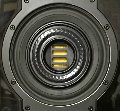
PHILIPS CD mechanism

Pre-production Philips CDM-0
| Specifications: | | 'Pinkeltje' prototype | Final 'red book' specification | | Disc diameter | | 11.5 cm | 12 cm | | Disc thickness | | 1.2 mm | 1.2 mm | | Playtime | | 60 min | 60 min | | Pit size | | 0.6 µm wide, 0.12 µm deep and 0.9 to 3.3 µm long | | Track pitch | | 1.6 µm | 1.6 µm | | Resolution | | 14 bits | 16 bits | | Dynamic range | | 85 dB | 90 dB | | Laser | | 780nm | 780 nm (infrared) |


Pinkeltje
 The first CD player was to be named 'Pinkeltje', after a well-known friendly gnome from a Dutch children's story. Small and compact, that was the development aim. It had to be a product that was appealing to the eye, easy to operate and smaller than a record player. This was achieved in record time. The demonstration for the Philips board in the autumn of 1978 made a good impression. The table next to the player held a cubic meter of electronics, hidden from sight by a black cloth. A few cables were used to connect the mechanics of the player to the extensive signal processing. The engineers would incorporate this into the little gnome at a later stage. Although everyone knew what was under the cloth, they believed in the new sound. The first CD player was to be named 'Pinkeltje', after a well-known friendly gnome from a Dutch children's story. Small and compact, that was the development aim. It had to be a product that was appealing to the eye, easy to operate and smaller than a record player. This was achieved in record time. The demonstration for the Philips board in the autumn of 1978 made a good impression. The table next to the player held a cubic meter of electronics, hidden from sight by a black cloth. A few cables were used to connect the mechanics of the player to the extensive signal processing. The engineers would incorporate this into the little gnome at a later stage. Although everyone knew what was under the cloth, they believed in the new sound.
The first thing that the developers had to worry about was not the size of the electronics. The circuits could always be further reduced in size later when the product was ready to go into production. What they had to do now was to show that it worked. One crucial factor here was the way in which the sound information was coded. Now that the analog recording of music could no longer be used, a new digital technique had to be developed. The Philips researchers were able to draw on the experience gained with digital signal technology in the field of telecommunications.
In the first prototypes Philips had tested a simple and efficient technique for converting the analog sound signal into digital ones and zeros. With delta modulation, the changes in voltage in the microphone are followed by ones and zeros. A one represents a rise in voltage, a zero represents a fall. In this way, relatively few ones and zeros are required to record the signal accurately. The ones and zeros can be used later to reconstruct the voltage pattern precisely. The disadvantage is that no codes must be lost or else the player quickly loses track of what it is doing. And that is precisely what happened. A duet that had been recorded on a CD in this way was not worth listening to. That was clearly not the way to do it then. The following Philips prototypes therefore used a different technique (pulse code  modulation) which requires more ones and zeros but gives a better result. With pulse code modulation, the microphone voltage is translated into a digital figure at each successive moment. For example, 3 millivolts becomes 011 and 6 mV is converted to 110. The advantage of this is that the microphone voltage can always be reconstructed, even if a part is missing. It is for this reason that the results achieved with pulse code modulation are better than those obtained with delta modulation. modulation) which requires more ones and zeros but gives a better result. With pulse code modulation, the microphone voltage is translated into a digital figure at each successive moment. For example, 3 millivolts becomes 011 and 6 mV is converted to 110. The advantage of this is that the microphone voltage can always be reconstructed, even if a part is missing. It is for this reason that the results achieved with pulse code modulation are better than those obtained with delta modulation.
Although the player was a long way off being finished, it seemed important at this early stage in the product development to win the support of both the public and the industry for this idea. Other companies too were already working on audio versions of video discs. AEG-Telefunken was working on a Mini Disc and JVC on an Audio High Density (AHD) system. In order to prevent a battle between the different, non-compatible systems, Philips had to show quite clearly how far it had progressed. In March 1979 a press conference was organized to let people hear how beautiful digital music could be. The demonstration room was filled with Schubert’s Unfinished Symphony. The prototype had been finished, but the product was not yet ready.
Philips CDM-0
Philips CDM-1
Philips CDM-2 Philips CDM-3
Philips CDM-4
Philips CDM-9
Philips CDM-12 / CD-Pro
Philips CDM-14

CDM-14
[size=725.53%]
The single-beam swing arm |
With only a few exceptions, Marantz CD players, whose sound quality has been highly valued since first appearing on the market, have always featured Philips drive mechanisme. The first Marantz CD player, the Marantz CD-63 (1982), was a small-scale top-loading model. The superb design leaves a lasting impression, and thanks to its compact size and simple disc changing system and operation, it is more highly valued now than it was at the time of its original release. The drive mechanism installed in this model is the legendary "Philips CDM0" which is even more highly rated today than it was at the time of its release. This single-beam swing arm system features a fulcrum evocative of the tone arm on an analog record player. This system was first used for the CDM0, and was continually employed throughout their entire series of CD drive mechanisms, including the final Philips CDM9 Pro.
The pursuit of stable performance led to Philips' development of the single-beam swing arm system. Imposing a couterweight (balancing weight) on the side facing the optical lens block enables the system to adjust the weight distribution and move the optical system usigin relatively minimal power. It also facilitated increased structural precision and, perhaps even more importantly, allowed overall movement to be controlled using highly versatile analog servo circuitry.
CDs are irradiated with a 780nm red laser beam from the polycarbonate resin substrate side, and whether the digital data is "0" or "1" is determined by an increase or decrease in the reflection of the laser beam. Thus, extremely accurate optical technology (lens design, lens fabrication, special coatings, and precise assembly) is required for the small optical pickup block.
Rodenstock |
The company placed in charge of this was the respected German optical manufacturer Rodenstock. Philips has used extravagant glass-backed optical lens blocks designed by Rodenstock in all of their high-grade drive mechanisms beginning with the Philips CDM0.
Philips CDM0 |
The Philips CDM0, as indicated by its model number, was the first CD drive mechanism to be developed. However, not all Marantz CD-63s, Marantz CD-73s and Philips LHH2000s were equipped with the Philips CDM0. The Philips CDM0 was replaced by the new and improved Philips CDM1 after a relatively short periode. The steel plate and some other parts used in the Philips CDM0 were found to be problematic during mass production.
Philips CDM1 |
Thus, the Philips CDM1 was produced using zinc die-cast for all sensitive sections to remove unwanted resonance. The Philips CDM1 also featured major improvements in the precision of all of its parts. The famous Marantz CD-34, with its unprecedented price-tag, was the first model in which the Philips CDM1 was employed. Later, a special fine-tuned version of the Philips CDM1 developed for use in high-end players like the Marantz CD-94 and Marantz CD-95.
The Philips CDM1 was used in Philips products manufactured in Belgium and Marantz products manufactured in Japan. The amazing success of the Marantz CD-34 manufacutred in Belgium helped made revision of the system of supplying the drive mechanismes a necessity.
Thus, Marantz established an assembly line at the Company's main factory in Sagamihara, produced all necessary components, and began producing Philips CDM1s in Japan. The Marantz CD-54 and Marantz CD-84 released in 1984 both utilized Japanese-made CDM1 units.
Philips CDM2 |
The Philips CDM2, with a resin top plate, was developed with the aim of reducing cost and weight while maintaining the quality of the zinc die-cast in the Philips CDM1. The Philips CDM2 however did not last long and was only installed in less expensive machines, such as the Marantz CD-25, Marantz CD-45, Marantz CD-65 and Marantz CD-75.
Philips CDM1 mk2 |
The last large-scale drive mechanisme to follow in the wake of the Philips CDM0 and Philips CDM1 was the Philips CDM1 mk2. This was based on a flat top plate design, with additional intergrated circuitry and a compact base. Of course, the entire unit was made from strong die-cast metal. The Philips CDM1 mk2 was used in the Marantz CD880j, Marantz CD80 and Philips CD880. Period wise, this was around the time that 8-cm "CD-single" was introduced.
Philips CDM4 |
As the Philips single-beam swing arm type drive mechanisme evolved, the extremely compact Philips CDM4 appeared. There are many versions of the Philips CDM4, the most representative of which are the Philips CDM4M with a hard resin top plate, and the die-cast Philips CDM4MD. With the appearance of the Philips CDM4, complete miniaturization of the drive unit, including the drawer mechanism indispensable in a front-loading system, became possible.

Philips CDM4MD
Philips CDM9 Pro |
The final single-beam swing arm drive mechanism employed by Marantz was the Philips CDM9 Pro. This unit was used in the Marantz CD-23 series of CD players for popular Musiclink Series of miniature components. This drive mechanisme was a single-beam swing arm type developed to achieve maximum miniaturization. The "Pro" designation apparently meant to signify the fact that it employed a highly durable brushless servo motor, a glass optical lens block, and a machined aluminum turntable.
Philips CDM3 |
There is one single-beam swing arm drive mechanism that was never used by Marantz, the Philips CDM3. This mechanism became well know when it was used in the professional-use Studer A730 (1988) developed jointly by Philips and the famous professional component manufacturer Studer. The Philips CDM3 was originally designed for use in car audio and had a lightweight die-cast body, which still managed to provide substantial rigidity. In addition to the Studer A730, the Philips CDM3 was also used by Luxman Japan.

Philips CDM3
The 3-beam linear tracking system |
The Philips CDM9 Pro was the last Philips single-beam CD drive mechanism. Thereafter, they switched to the 3-beam linear tracking system adopted early on by Japanese manufactures. Philips chose a linear tracking construction that moved the optical lens block in a straight line because computer CD-ROM drives requiring high read speeds were in demand.
The swing arm system using a counter-weight had too much moving mass and too slow random access times for this application. In addition, because the swing arm system used in tracking error angle, it was not possible to use this system with more than a single-beam. For high-speed reading, a 3-beam system that can pick up adjacent pit streams is more advantageous.
Single-beam swing arm type drive mechanisms however are sufficient for audio only systems that do not require high speed operation.
Philips CDM12.1 & VAM1252 |
The first Philips 3-beam linear tracking drive mechanism used by Marantz was the Philips CDM12.1. The Philips VAM1252, equipped with a die-cast body and commonly know as the CD Pro, was employed in the high-en Marantz CD-7. The low cost Philips VAM12 version of the Philips VAM1252 was used in the Marantz CD-17Da and Marantz CD-19a. The Philips VAM2200 series, which may be the last Philips-made CD-only drive mechanisme, was used in the laters Marantsz CD-only player, the Marantz CD-7300 (2002).
Marantz "engine" |
Future Philips drive mechanisms will most likely be DVD/Super Audio CD compatible, and we could see a shift towards inexpensive lines due to competition in the marketplace. Meanwhile, the present Marantz, under control of D&M Holdings, has started to develop its own drive mechanisms. Relying on outside suppliers brings the risk of being supplied components with a short lifespan. Therefore, the Company decided to initiate in-house development of drive mechanism.
The first Marantz in-house drive mechanism (referred to as an "engine" by Marantz) was installed in the multi-channel Super Audio CD players Marantz SA-17S1 and Marantz SA-8260. The mechanism was a linear tracking system with a twin laser single pickup structure that houses a 650nm red Super Audio CD laser and a 780nm red CD laser in a single optical system. This superior engine featured reduced unnecessary radiation, and was designed to be energy efficient.
The laters Marantz engine is mounted in the Marantz SA-8400 stereo only Super Audio CD/CD player. Although names, such as CDM1 and CDM9 Pro used by Philips, have not been asigned to the Marantz engines, this newest engine utilizes a twin laser single pickup linear tracking system similar to that of the first Marantz engine.
Sharp engine |
The Marantz SA-14, and the flagship Marantz SA-1 (which was the first Super Audio CD/CD player produced by Marantz) all utilize a Japanese made Sharp engine. This engine combines an aluminium die-cast disc tray and zinc die-cast mechanism base. The different metals helps to counter resonance. Future high-end machines will also likely feature in-house engines.
The first Marantz multi-channel Super Audio CD/CD player, the Marantz SA-12S1, is unique since it is based on the first Philips Super Audio CD player, the Philips SACD1000 (not sold in Japan), has been carefully designed to meet the requirements of audiophile, and uses a Philips Super Audio CD/DVD video/CD engine.
(Source: Stereosound - All about Marantz)


Philips CD-pro2LF
     
   
[ 本帖最后由 神坛 于 2009-8-25 17:32 编辑 ] |
|


 京公网安备 11010602010207号
( 京ICP证041102号,京ICP备09075138号-9 )
京公网安备 11010602010207号
( 京ICP证041102号,京ICP备09075138号-9 )













 狗仔卡
狗仔卡
 发表于 2009-8-24 09:00
 变色卡
变色卡




 楼主
楼主